Two hours north of Toronto, mirrored cabins all but vanish into the trees. The people behind Arcana on building for wellbeing, every season and the birds.
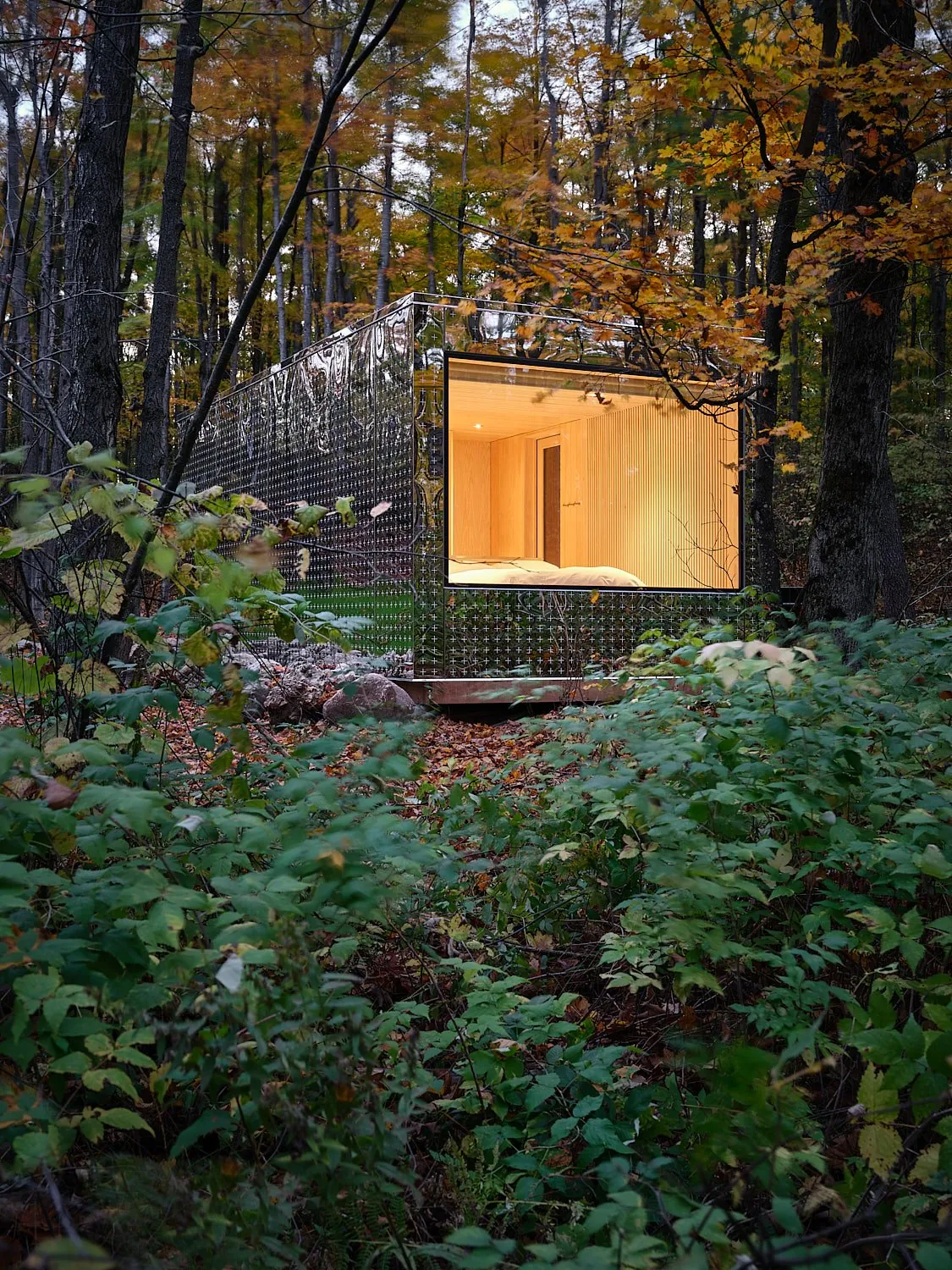
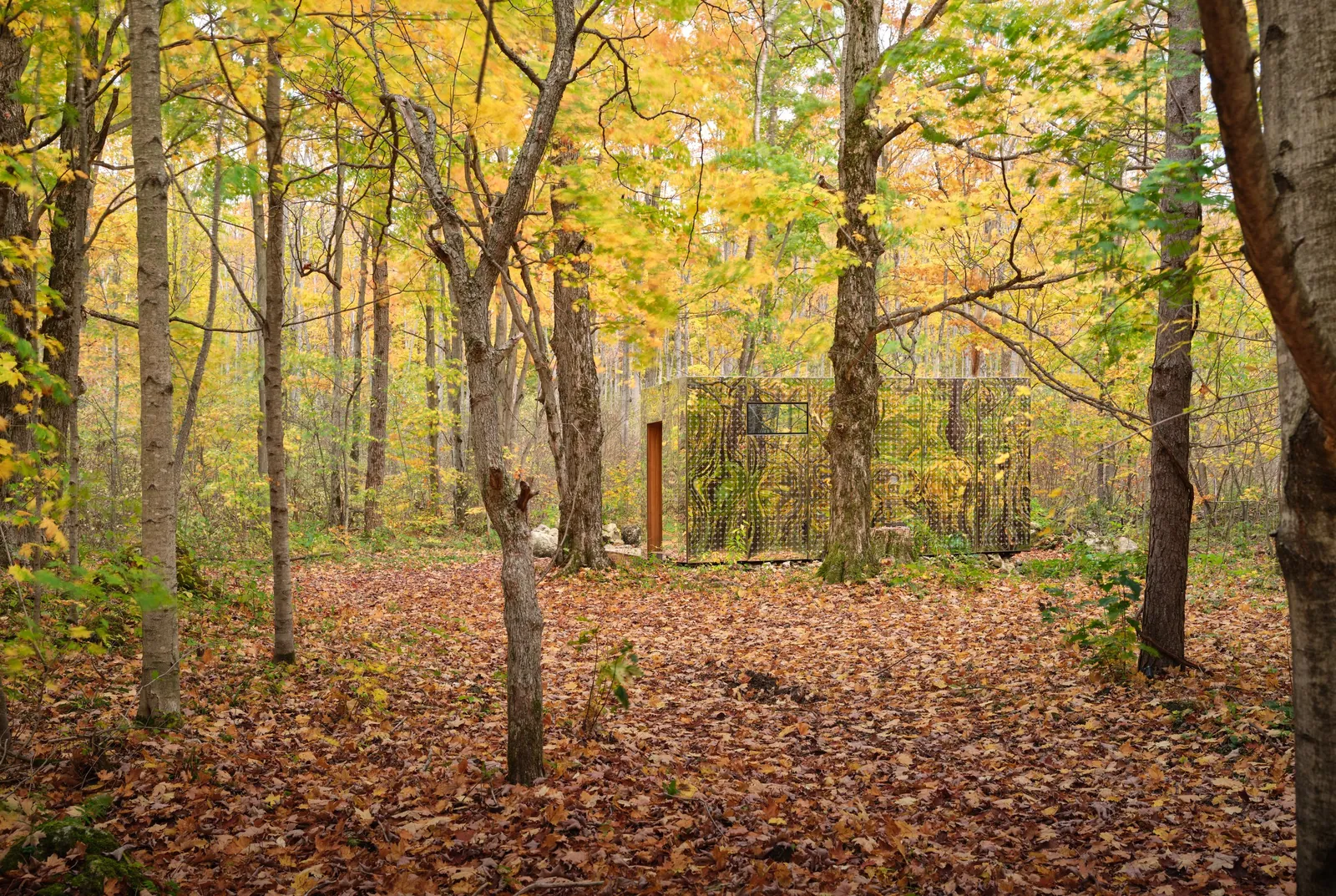
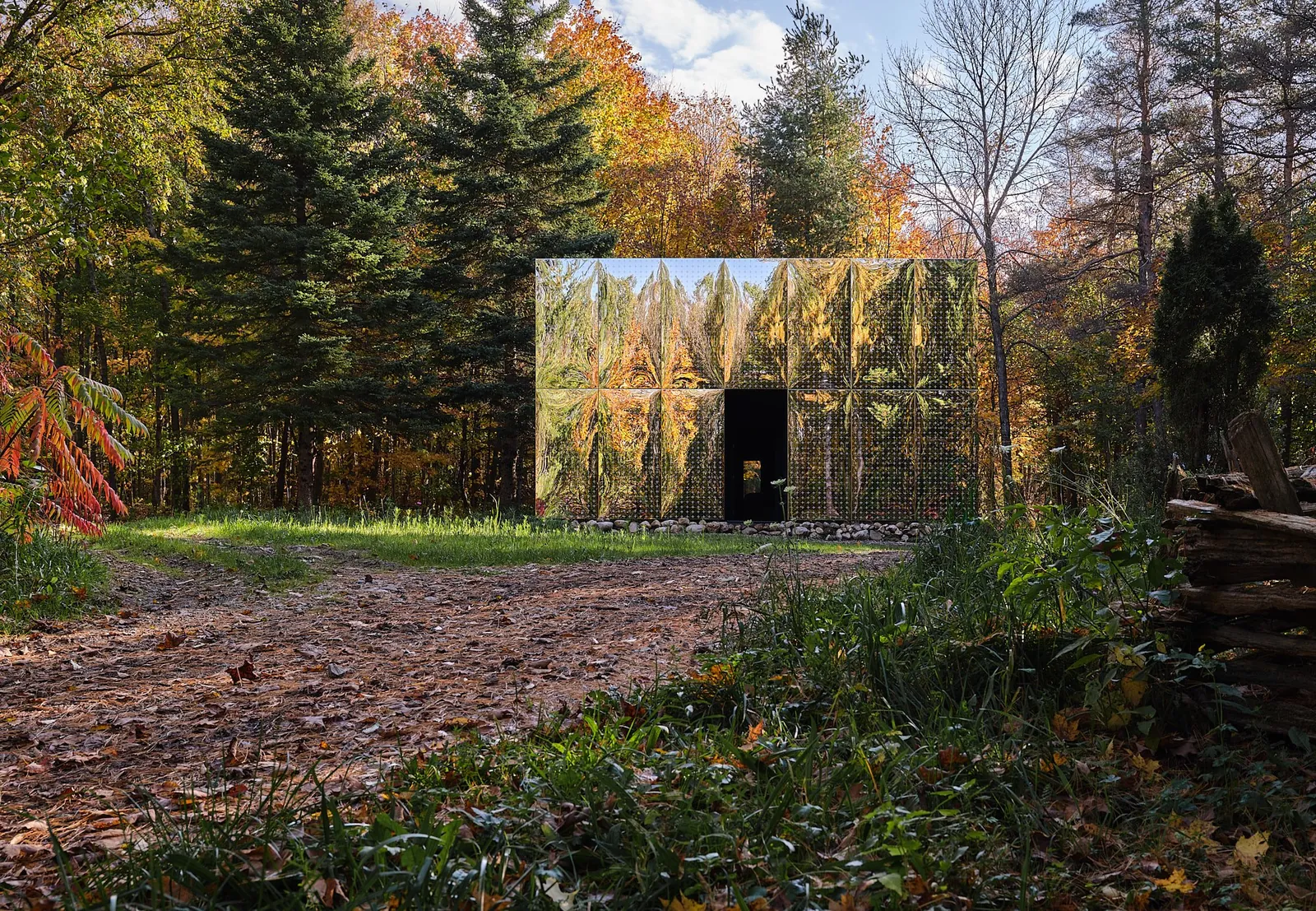
Walk into the woods at Arcana and the cabins are hard to find. Each one is clad in polished stainless steel, so the first thing you see is the forest itself, reflected back at you.
That was the idea. “The concept of immersion was at the forefront of the design process and led the team to create structures that camouflaged themselves invisibly into the natural environment,” says the architect Michael Leckie, whose Vancouver firm, Leckie Studio, designed them.
Mirrors in a forest raised an obvious problem. “One of the concerns shared by both the founder team and design team was the impact of the mirrored cabins on local wildlife,” Leckie says. “We developed a bird-friendly film to prevent bird strikes with the cabins. The applied pattern, a matrix of dots, provides visual cues for all wildlife to identify the cabins in the landscape.”
Arcana was started by a group of founders that includes Felicia Snyder and Alan Gertner, who built Tokyo Smoke. Snyder is clear about what it is and isn’t. “We started Arcana in response to the mental health crisis, and we don’t necessarily consider ourselves a hospitality concept but rather a concept exploring new modalities and experiences that support humans in their well-being,” she says.
Building it was harder than it looks. “Building for all four seasons was a challenge: we had to design for both extreme heat and extreme cold,” she says. “This meant burying our power, water and waste lines which was no easy feat. In the process we unexpectedly had to excavate limestone boulders. We now use these boulders to line the pathways at Arcana.”
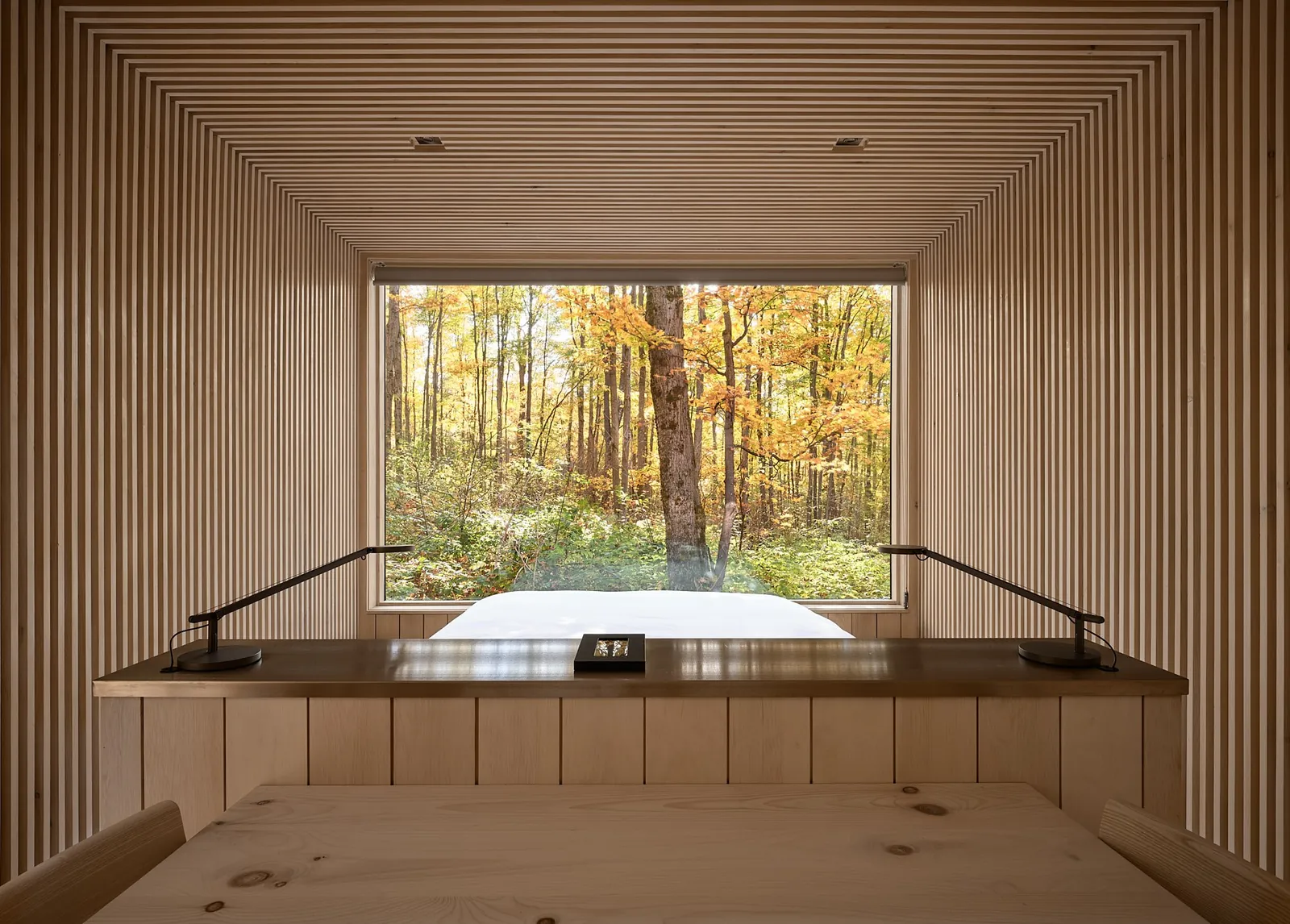
Inside, each cabin is a wood-lined box, with a bed set beside a window so large it erases the line between inside and out. Leckie kept the materials to a minimum, mostly maple or red cedar, but he resists calling the result minimalist. “We prefer to work with the essentialist ethos of Dieter Rams, Less But Better, as opposed to the Mies Van Der Rohe notion that Less is More,” he says.
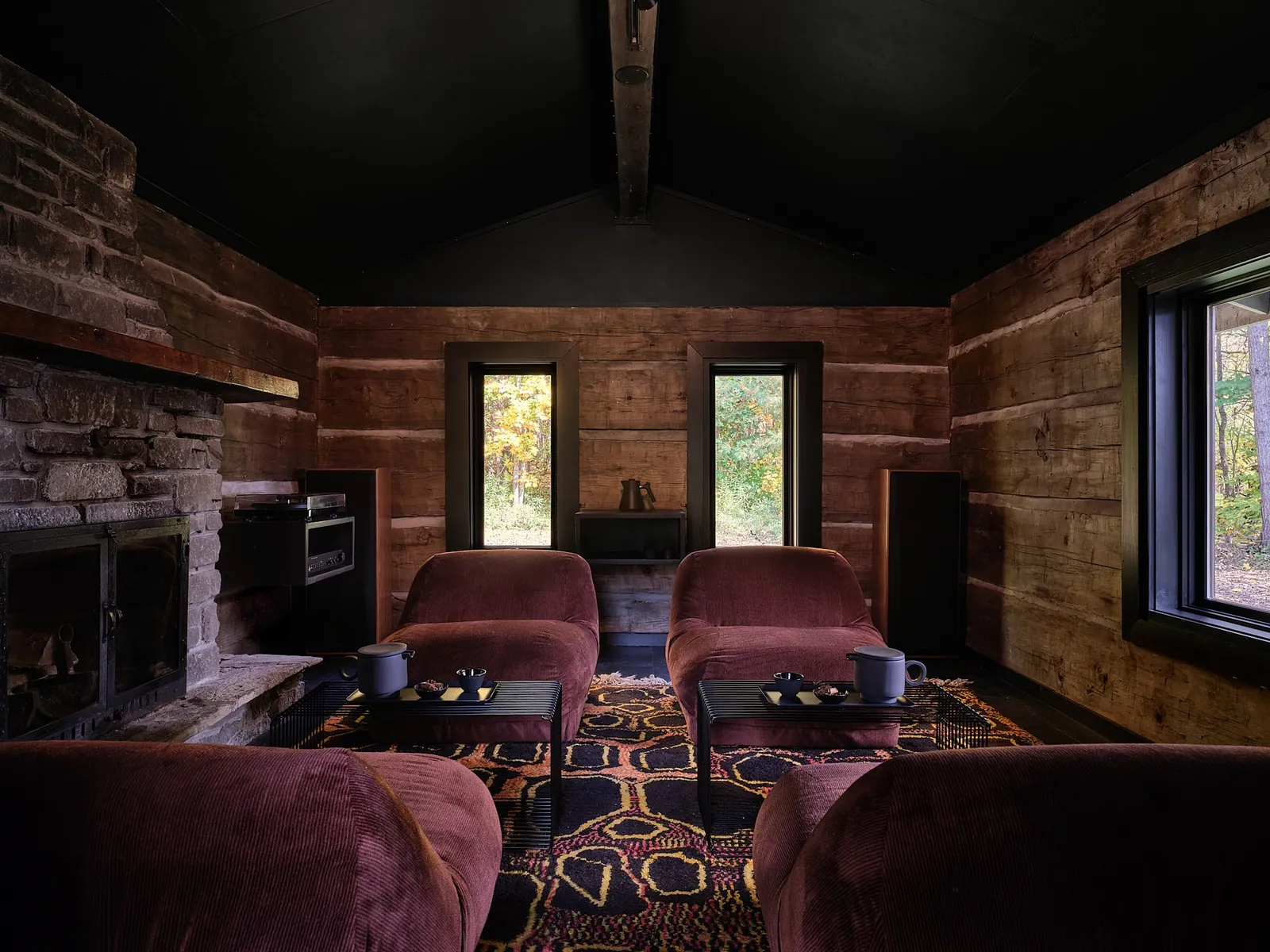
What guests do with their time is up to them. There are 15 kilometres of trails, with snowshoes in winter, and a sauna in a grove of pines beside a cold plunge pool. In the cabin, a 50-minute Sound Journey, created with Woom Center and The Dojo Upstate, plays through speakers on either side of the bed. A shared pavilion has a wood-burning fireplace, a seasonal selection of records and self-serve tea. Even the coffee is meant to slow you down: a hand grinder, a pour-over and beans from Good Grief, roasted in Thornbury, 20 minutes away.
The Toronto artist Celia Lee came to make work and found the place changed how she made it. “Being at Arcana felt like a completely clean slate to work with,” she says. “It enhanced my practice by learning to work with what was around me and to utilize it.”
For Snyder, the benefit runs both ways. “Ultimately, from a guest experience lens, we believe the more time you spend in nature, the better you are to it.”
Words by Mo Topping. Photography by DoubleSpace.