How a Melbourne student named Luke Westcott came to design the shirts South Sudan and Sierra Leone wore through war and Ebola.
In May 2014, South Sudan played its first Africa Cup of Nations qualifier, away to Mozambique. The country was not yet three years old, and five months earlier it had slid into civil war. The team lost 5-0.
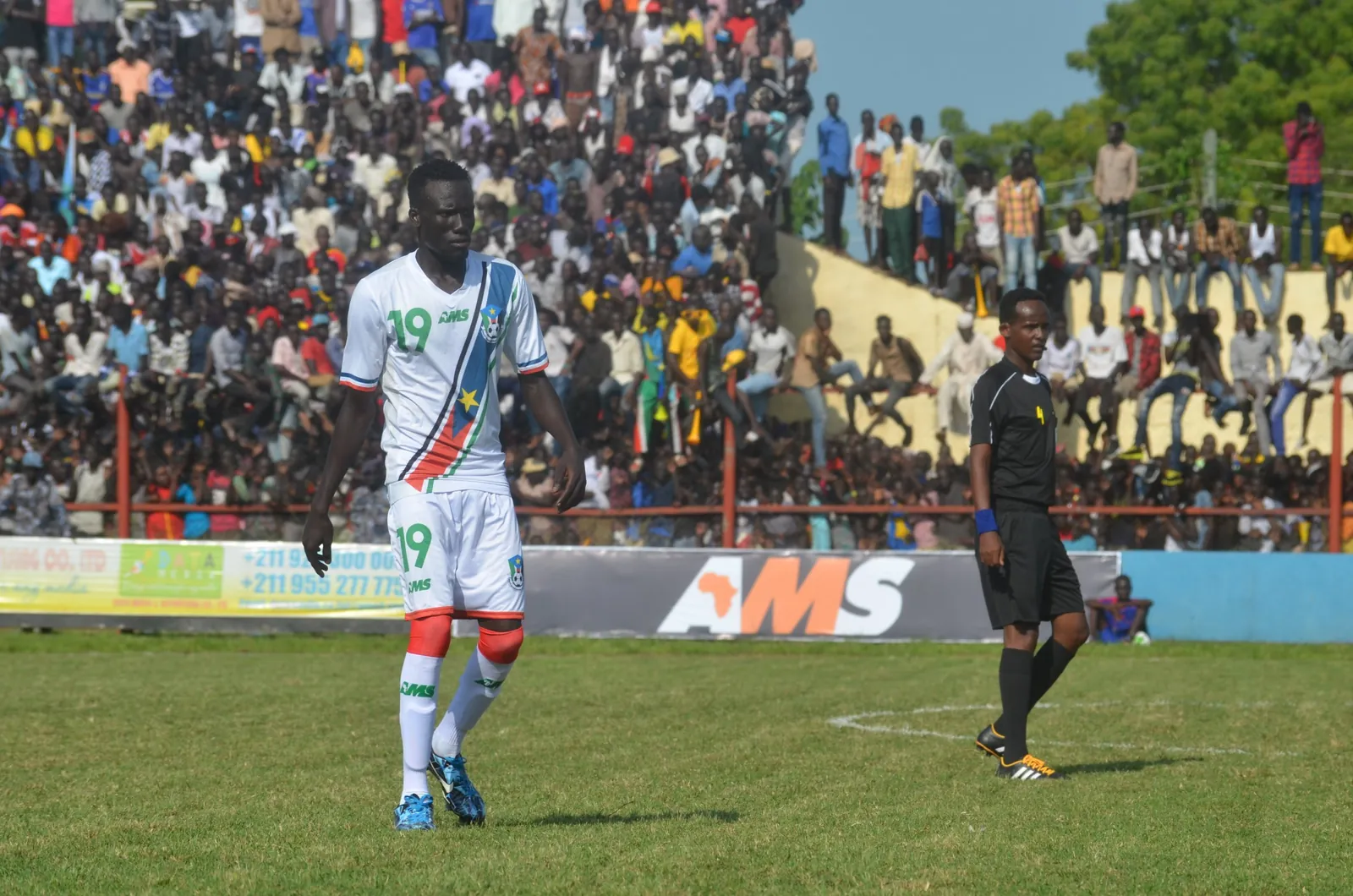
Also making its debut that day was the team’s new kit, patterned with traditional South Sudanese symbols. It wasn’t made by Nike, Adidas or Puma. It came from AMS, a tiny Australian company run by a Melbourne university student named Luke Westcott.
“We saw this as a great opportunity to come up with something special and it is still probably my favourite design we have made so far,” says Westcott, now 23. “It’s allowed the national team to develop a distinct identity and showcase their nation on the world stage.”
AMS started with a 15-year-old importing cheap goods from China and selling them to his classmates. Football shirts sold best, so he moved them to eBay, and soon the requests were coming in for teams he couldn’t find: obscure African national sides with no official kit supplier at all. Westcott saw a gap and decided to fill it.
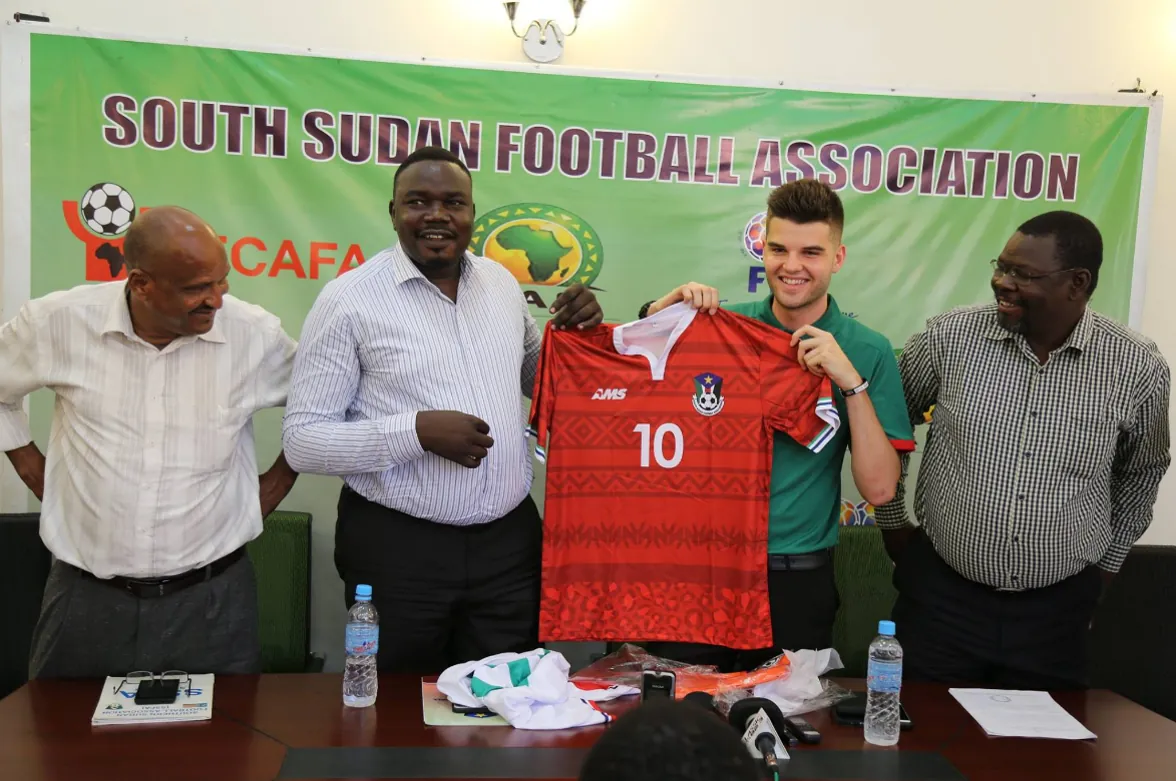
He pitched lower-ranked FIFA nations first, Somalia and Eritrea among them. The first to say yes was South Sudan. Westcott reached the president of the South Sudan Football Association on Facebook and got his chance, with one catch. He had three days to design the kits, find a manufacturer and deliver them.
“Thankfully it all worked out, but the quality of the kits were pretty terrible,” he says, laughing.
The association stayed with him anyway. AMS is now the exclusive supplier to the national team and to most of the clubs in the country’s league, and it will soon supply every state team as well.
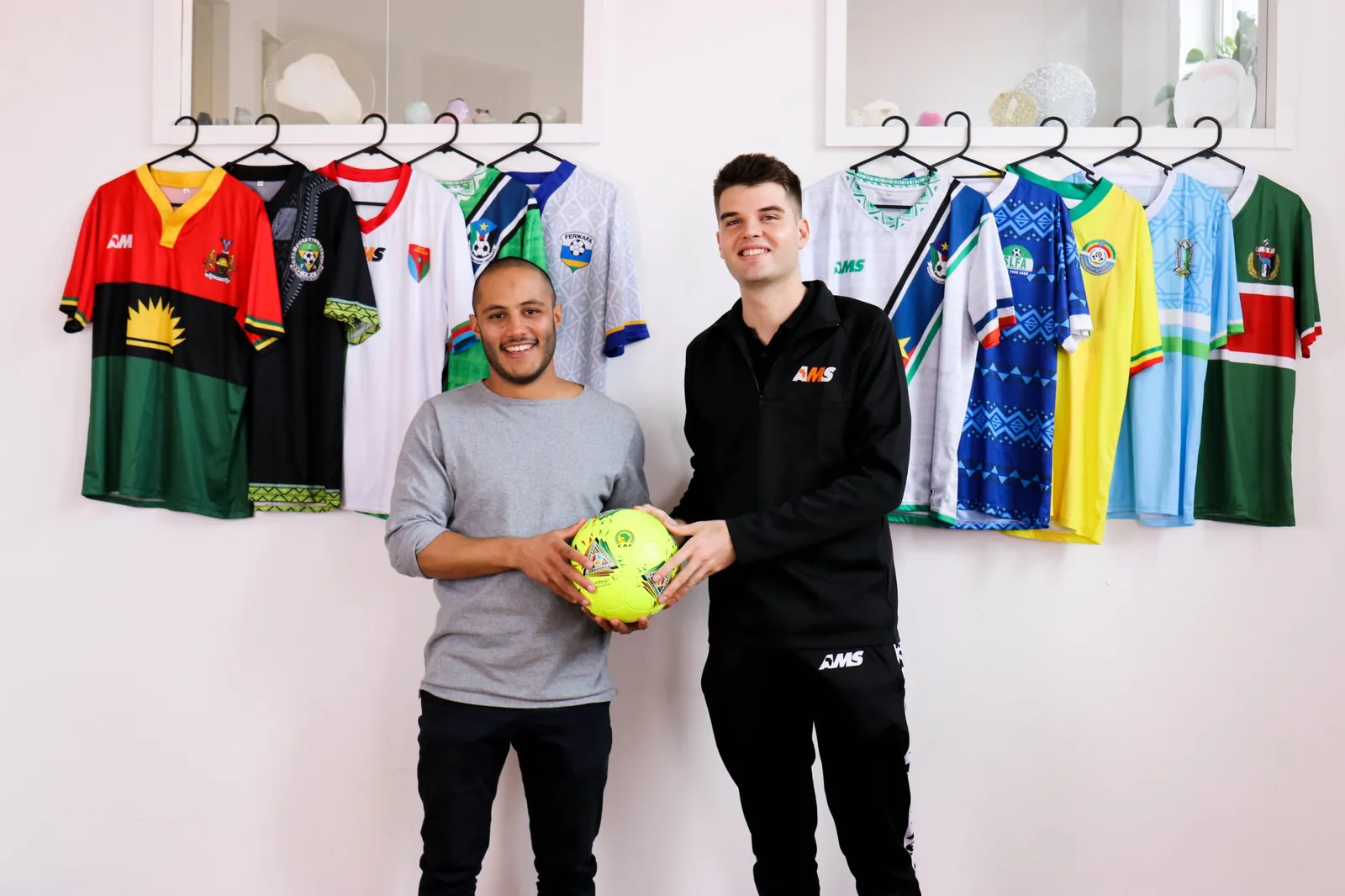
The business rests on a simple observation. Egypt, Cameroon, Ivory Coast, Nigeria, Ghana and South Africa are big enough to land deals with the global brands, and a tier below them, labels like Uhlsport, Macron and Airness pick up a few more. Much of sub-Saharan Africa is left off the map. “The majority of consumers in these markets cannot afford products from these brands and the brands will never reduce their prices to meet market demands,” Westcott says.
AMS works the other way. “The mission is to make a design that is instantly recognizable as being a uniform for each individual country,” he says. “Most national teams in Africa wear generic teamwear kits without any real design features relevant to that country.”
One of the next clients was Sierra Leone. In August 2014, with the Ebola epidemic at its height, the Confederation of African Football stopped matches in affected countries, and Sierra Leone went 18 months without a home game. At first no neutral country would host them, so they gave up home advantage altogether. Most of the squad played their club football in Europe, and they were still treated as a risk wherever they went.
“The players were constantly taunted and discriminated against, however, the patterned blue kits became a symbol of hope in a country that had suffered so much due to the epidemic,” Westcott says. “The lone fact that they made it onto the pitch for every match was still important for the nation.”
Rwanda signed in 2015. AMS now also counts Eritrea and Djibouti among its national-team clients, along with sides that sit outside FIFA, such as Zanzibar, Darfur, Western Sahara and Barawa.
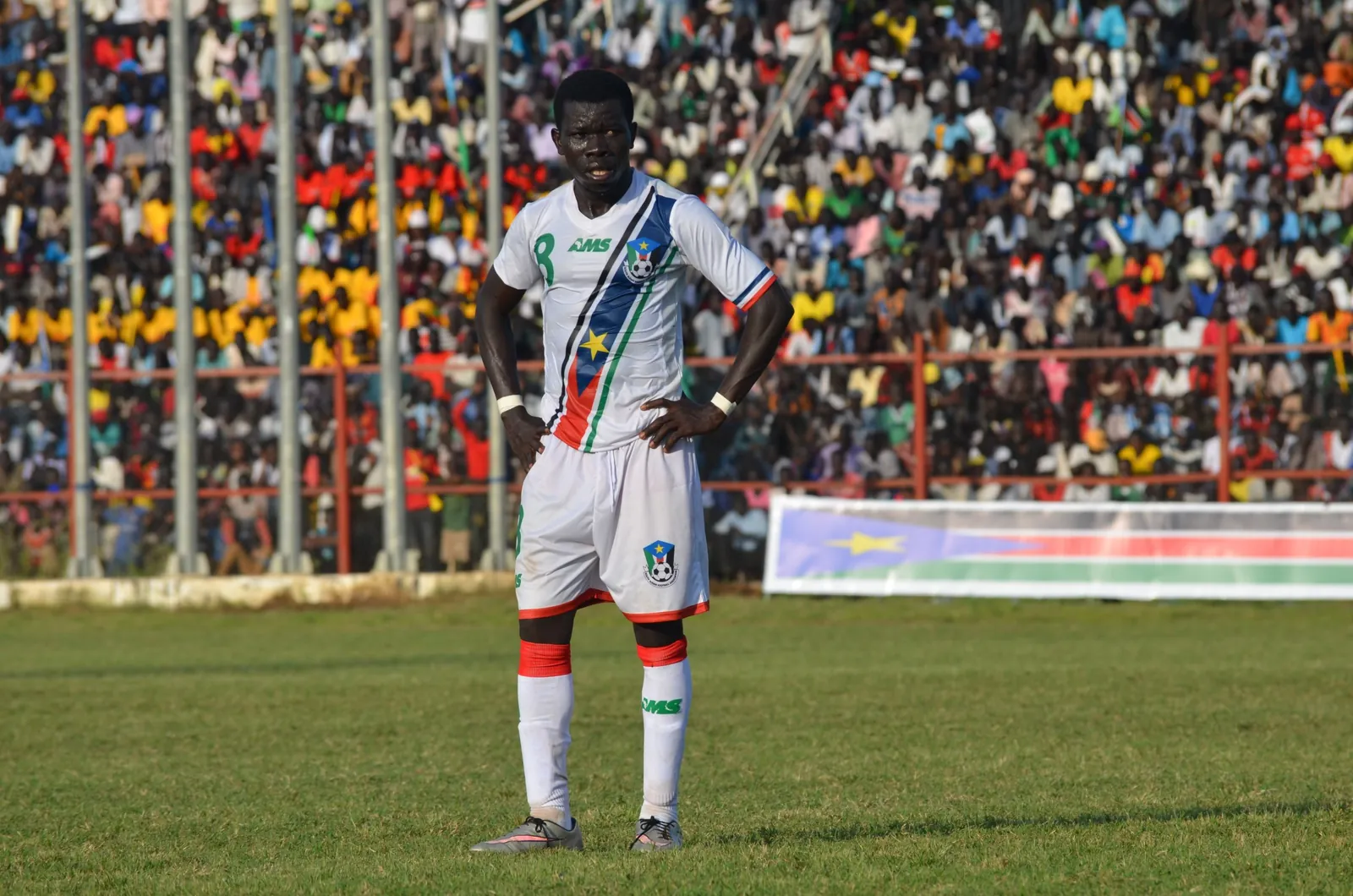
For the players, the shirts carry weight. Duach Jock, a defender for South Sudan, has worn them for his country. “I think the design is what captivates most people. You see South Sudan right away and people connect to that immediately,” he says. “Even in the diaspora they are a favourite. Football unites and this AMS jersey gave us a true unique identity and a unification among ourselves as we are all representing one nation, one flag.”
“I’m proud to wear them each time I get the opportunity to represent my country,” Jock says. “Luke’s work has been amazing. When I put on my jersey and see my country’s colours across my chest, I get a certain joy and complete happiness to representing my nation, my home and my people.”
Westcott sees the same thing from the other side. “In many cases, football is the only opportunity for a country in the region to be represented positively on the world stage and it brings a lot of national pride when a national team gets a win or plays against global superstars,” he says. “A national team can bring together a nation that may be divided and allows an entire country to support the one team.”
He wants AMS to source everything locally within three or four years, and plans to move the office from Melbourne to East Africa this year. He sees the same need in the Pacific Islands. The goal is the one he started with in that three-day scramble for South Sudan.
“We hope that fans will be proud that their national team is wearing a uniform that carries the traditions of their country and plays a role in motivating the players to fight for their homeland,” he says.
Words by Braeden Alexander. Images courtesy of AMS.