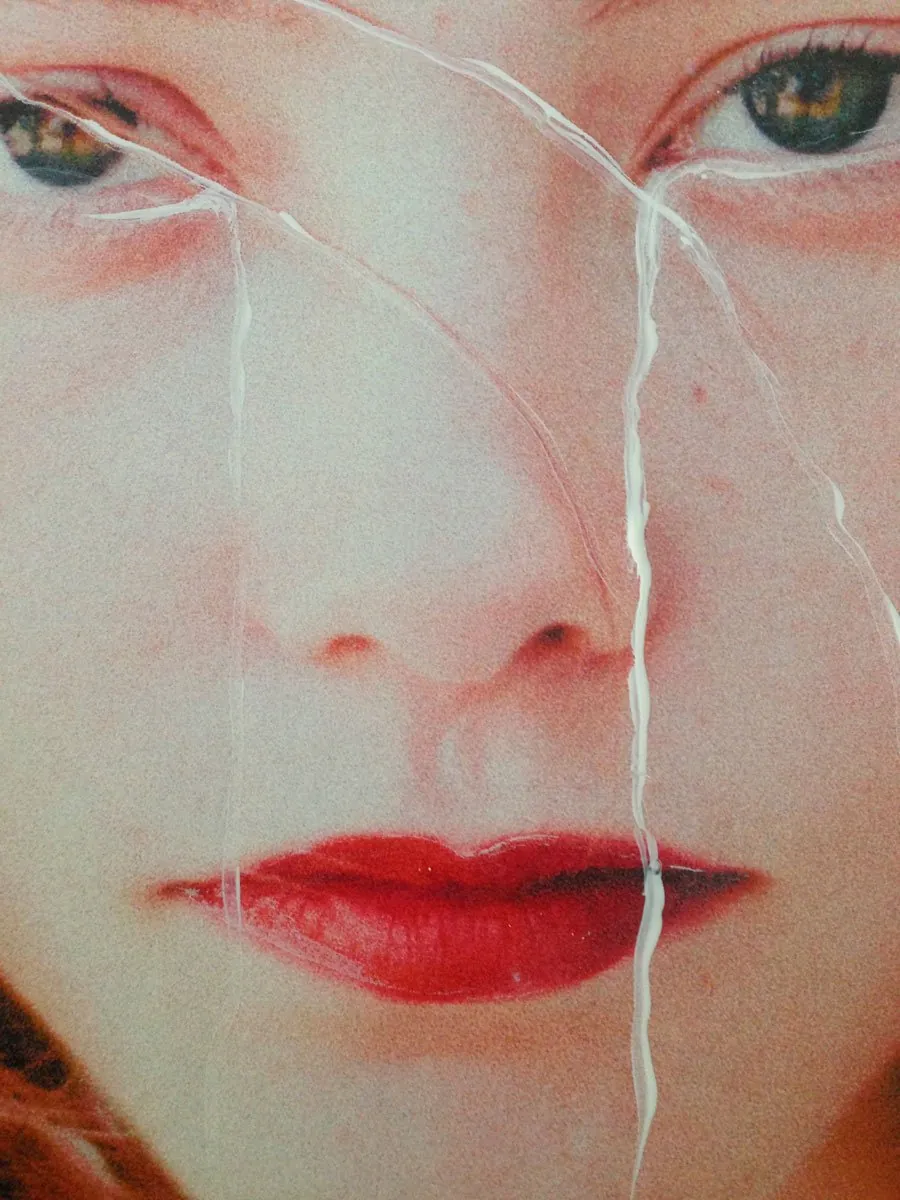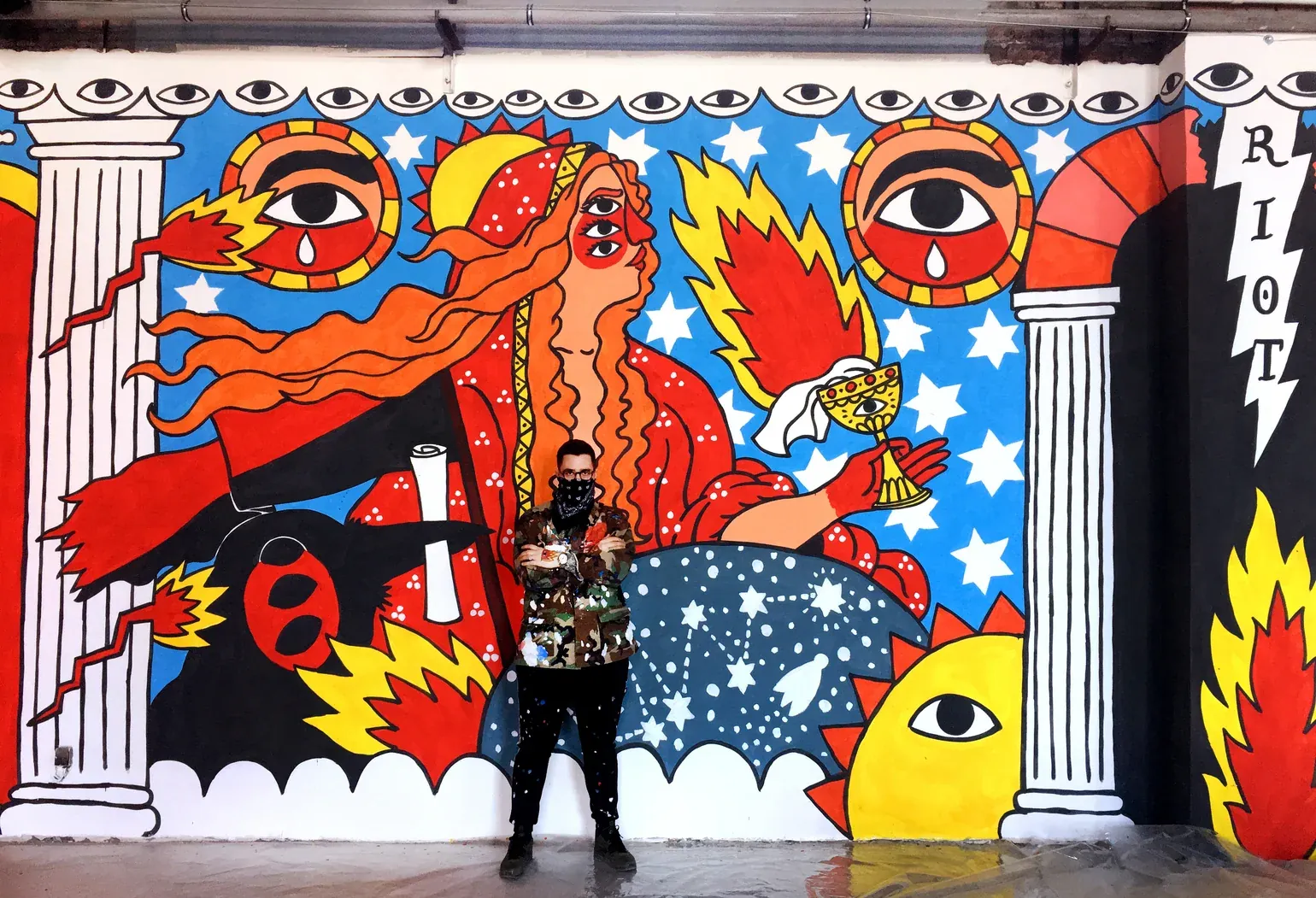
From a socialist mosaic at Alexanderplatz to a cosmonaut drifting over Kreuzberg, Berlin has always spoken through its walls. These days, it never stops.
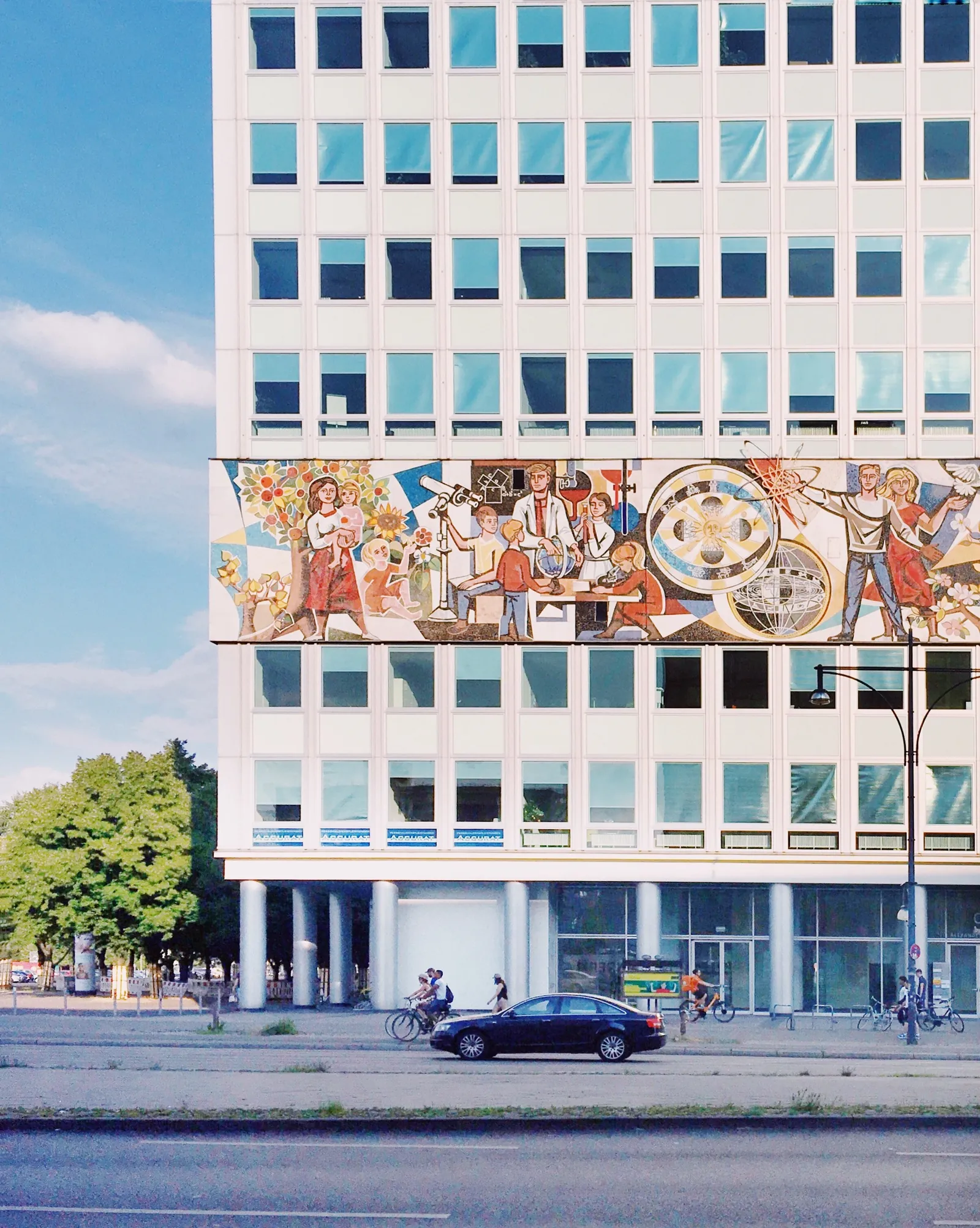
At Alexanderplatz, a band of colour seven metres tall wraps around the Haus des Lehrers, the House of the Teacher. Walter Womacka’s mosaic Unser Leben, or Our Life, was finished in 1964 and is made of about 800,000 small stones. It shows East German life the way the state wanted it seen: families, workers, scientists, all of them busy and content. It may be the most official wall art in Berlin.
Three years before it was finished, the city got a very different kind of wall. Built on August 13, 1961, the Berlin Wall split Berlin until November 9, 1989. On the western side, it became a canvas. The French artist Thierry Noir began painting it in 1984, and others followed until the concrete was covered. The eastern side faced the guarded border strip, where nobody was allowed near, and it stayed bare.
When the Wall came down, artists claimed what was left. In the spring of 1990, 118 artists from 21 countries painted a 1.3-kilometre stretch of it, and it became the East Side Gallery.
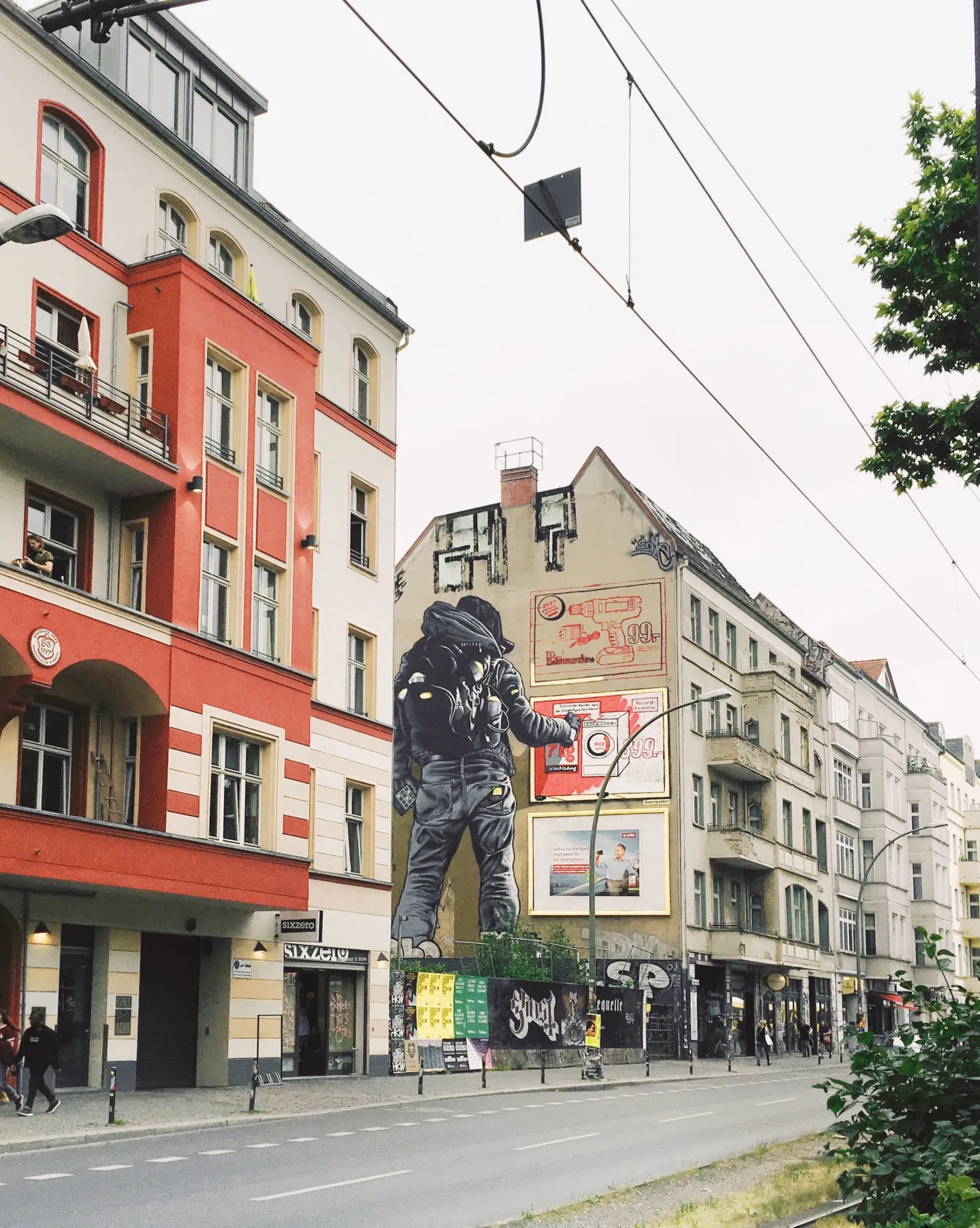
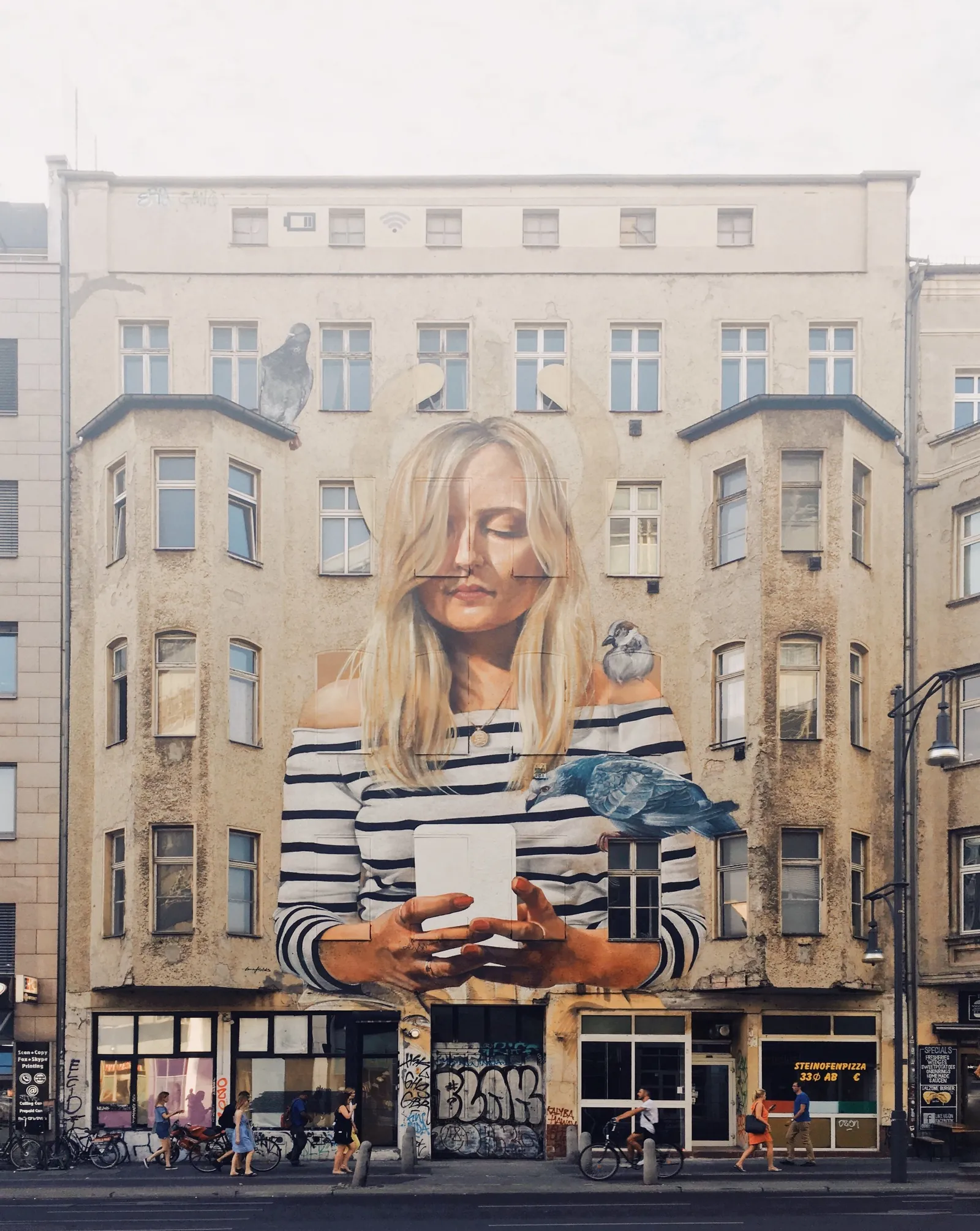
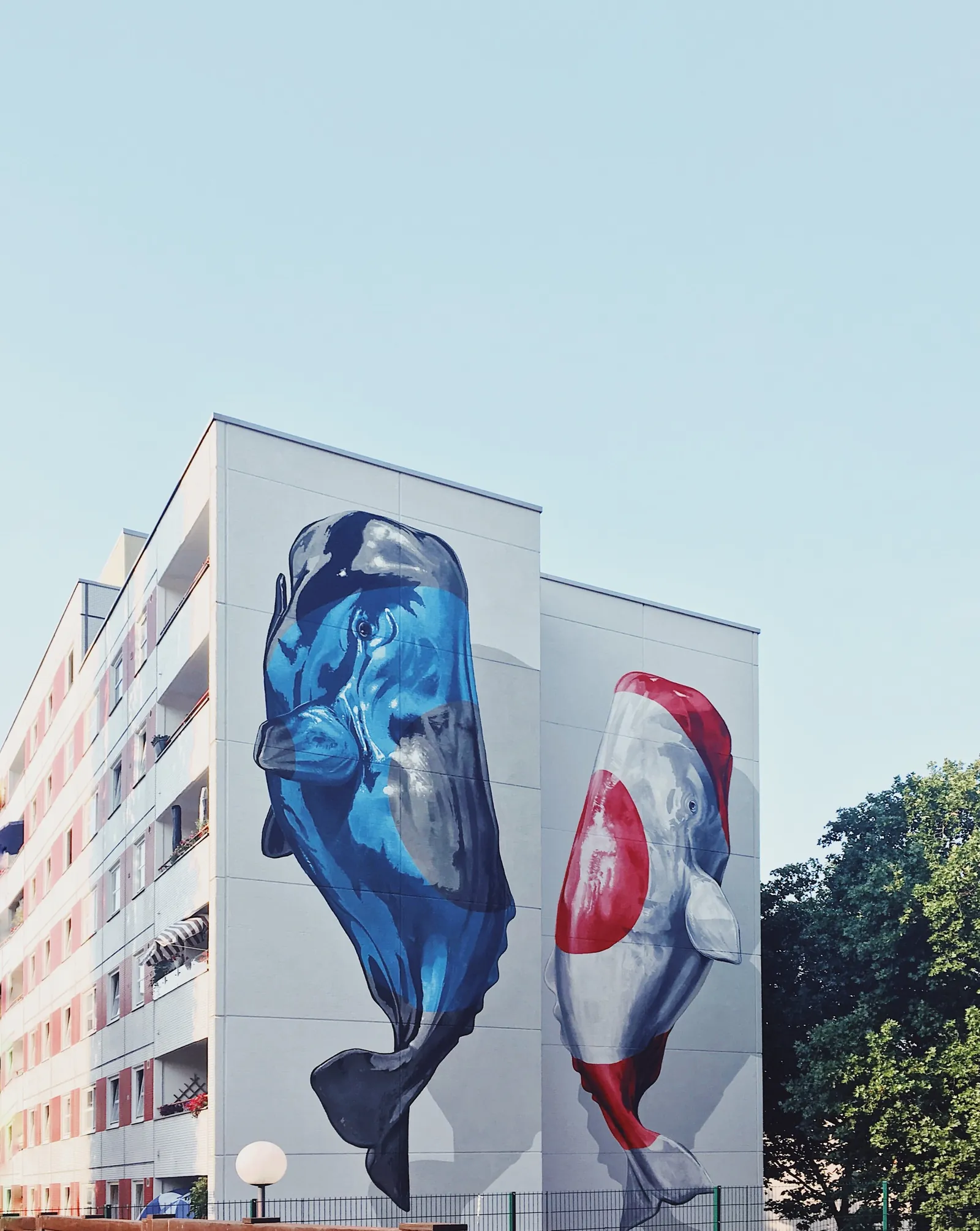
Since then, the whole city has been fair game. In Kreuzberg, a spacesuited figure floats up the side of an apartment building, Victor Ash’s Cosmonaut, painted in 2007. Elsewhere, a woman in a striped top looks down at her phone across the front of a residential block while birds settle around her, and two enormous fish, one blue, one red and white, swim up the end wall of another.
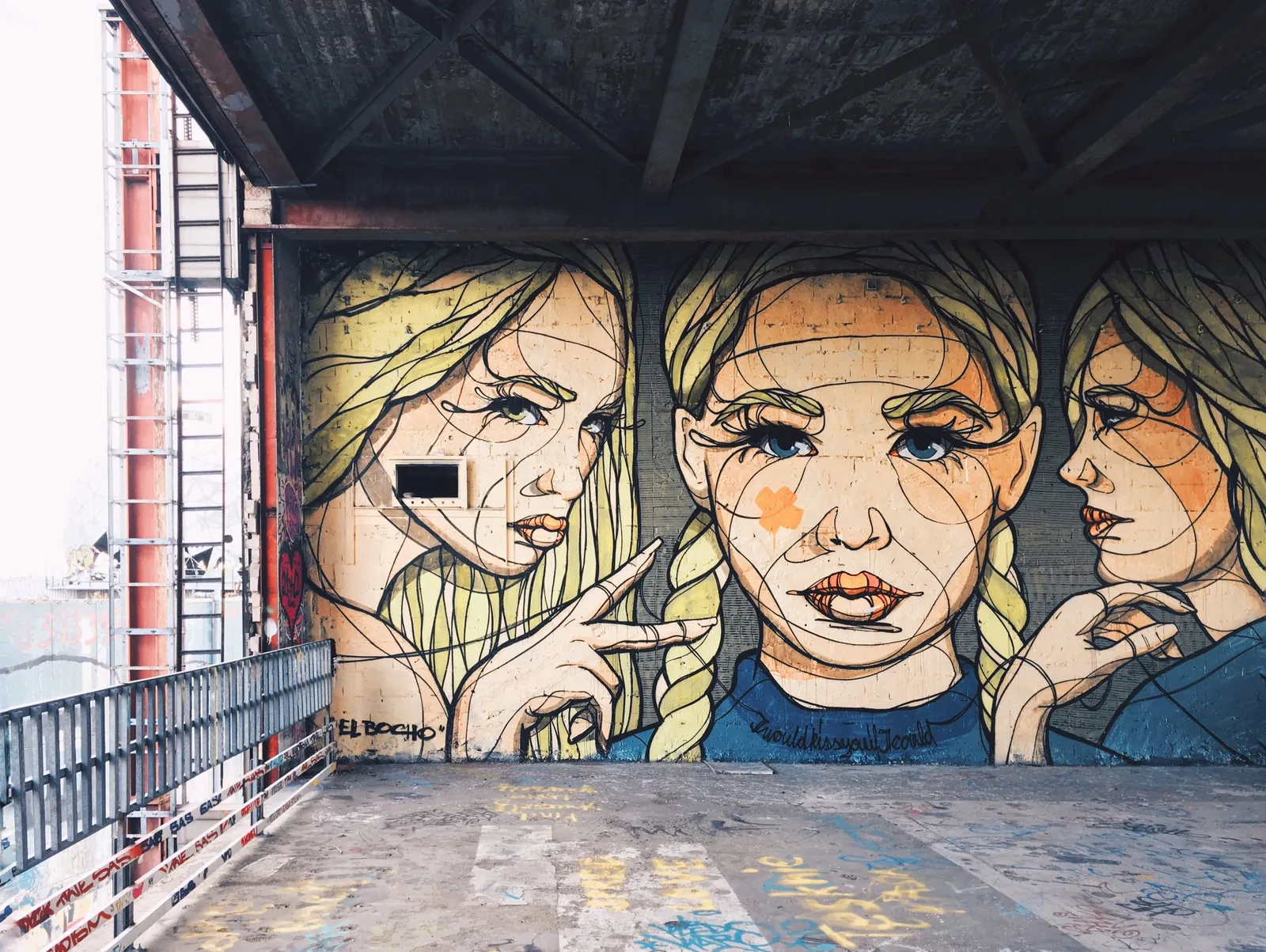
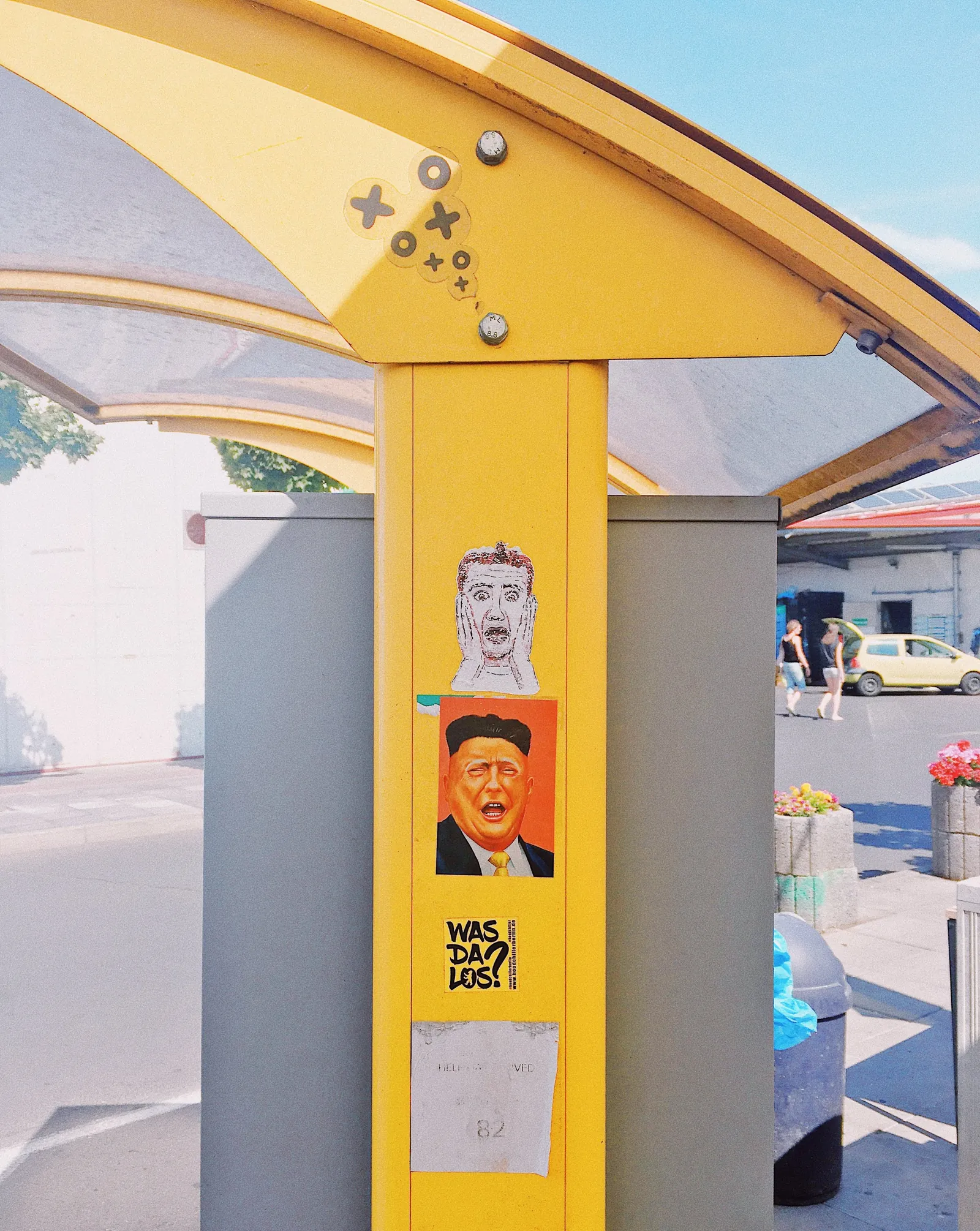
Some of the best work is much smaller. The Spanish-born artist El Bocho has been putting up his pieces around Berlin for years, faces of girls with pale braids and sideways looks, and his best-known series, Little Lucy, follows a sweet-faced girl who keeps trying to kill her cat. The cat survives every time. On a yellow bus-stop post, stickers pile up on top of one another: a drawn face, a cartoon politician, a slogan.
In 2003, the city’s mayor, Klaus Wowereit, called Berlin “arm, aber sexy,” poor but sexy. The walls make the case for him.
In May 2017, a 1982 painting by Jean-Michel Basquiat, who started out spraying words on the walls of Lower Manhattan, sold at Sotheby’s in New York for $110.5 million. Most of what is painted on Berlin’s walls can never be sold like that. Much of it won’t even last: a new piece goes up, an old one is painted over, a sticker is peeled away and replaced.
Nobody owns that. By next year, some of it will be gone, and something else will be in its place.
Words by Braeden Alexander. Photography by Pavel Nekoranec.